Grotesque Meaning, Definition, Synonym
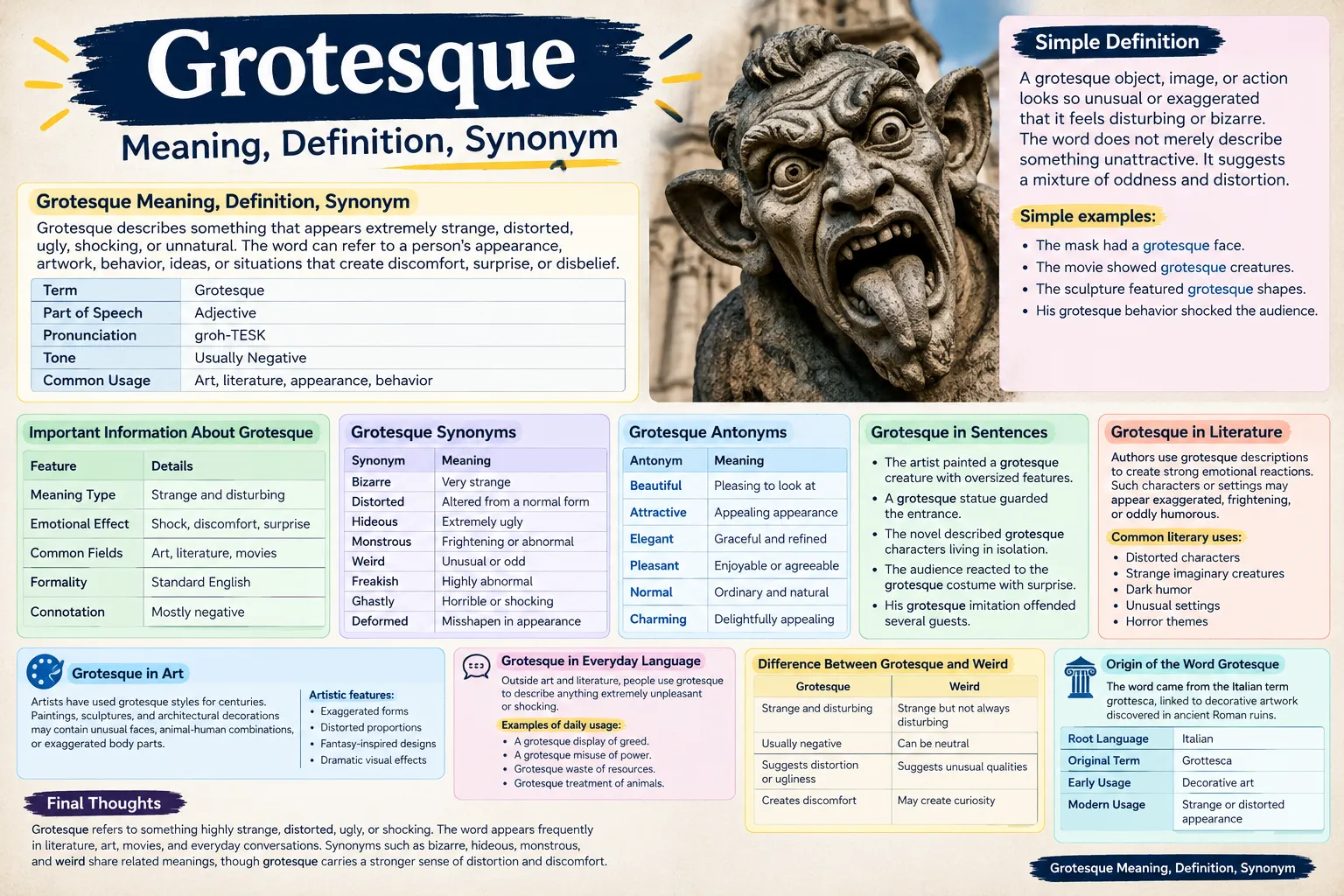
Grotesque describes something that appears extremely strange, distorted, ugly, shocking, or unnatural. The word can refer to a person’s appearance, artwork, behavior, ideas, or situations that create discomfort, surprise, or disbelief.
| Term | Meaning |
|---|---|
| Grotesque | Extremely odd, distorted, or unpleasant |
| Part of Speech | Adjective |
| Pronunciation | groh-TESK |
| Tone | Usually Negative |
| Common Usage | Art, literature, appearance, behavior |
Grotesque Definition in Simple Words
A grotesque object, image, or action looks so unusual or exaggerated that it feels disturbing or bizarre. The word does not merely describe something unattractive. It suggests a mixture of oddness and distortion.
Simple examples:
- The mask had a grotesque face.
- The movie showed grotesque creatures.
- The sculpture featured grotesque shapes.
- His grotesque behavior shocked the audience.
Important Information About Grotesque
| Feature | Details |
|---|---|
| Meaning Type | Strange and disturbing |
| Emotional Effect | Shock, discomfort, surprise |
| Common Fields | Art, literature, movies |
| Formality | Standard English |
| Connotation | Mostly negative |
Grotesque Synonyms
Several English words share a similar meaning with grotesque.
| Synonym | Meaning |
|---|---|
| Bizarre | Very strange |
| Distorted | Altered from a normal form |
| Hideous | Extremely ugly |
| Monstrous | Frightening or abnormal |
| Weird | Unusual or odd |
| Freakish | Highly abnormal |
| Ghastly | Horrible or shocking |
| Deformed | Misshapen in appearance |
Grotesque Antonyms
These words express an opposite idea.
| Antonym | Meaning |
|---|---|
| Beautiful | Pleasing to look at |
| Attractive | Appealing appearance |
| Elegant | Graceful and refined |
| Pleasant | Enjoyable or agreeable |
| Normal | Ordinary and natural |
| Charming | Delightfully appealing |
Grotesque in Sentences
The word appears in many forms of writing and speech.
Examples:
- The artist painted a grotesque creature with oversized features.
- A grotesque statue guarded the entrance.
- The novel described grotesque characters living in isolation.
- The audience reacted to the grotesque costume with surprise.
- His grotesque imitation offended several guests.
Grotesque in Literature
Authors use grotesque descriptions to create strong emotional reactions. Such characters or settings may appear exaggerated, frightening, or oddly humorous.
Common literary uses:
- Distorted characters
- Strange imaginary creatures
- Dark humor
- Unusual settings
- Horror themes
| Literary Element | Role of Grotesque |
|---|---|
| Character | Creates memorable personalities |
| Setting | Adds mystery or fear |
| Symbolism | Shows deeper emotional themes |
| Horror | Strengthens tension |
Grotesque in Art
Artists have used grotesque styles for centuries. Paintings, sculptures, and architectural decorations may contain unusual faces, animal-human combinations, or exaggerated body parts.
Artistic features:
- Exaggerated forms
- Distorted proportions
- Fantasy-inspired designs
- Dramatic visual effects
Grotesque in Everyday Language
Outside art and literature, people use grotesque to describe anything extremely unpleasant or shocking.
Examples of daily usage:
- A grotesque display of greed.
- A grotesque misuse of power.
- Grotesque waste of resources.
- Grotesque treatment of animals.
Difference Between Grotesque and Weird
Many learners confuse these words because both refer to unusual things.
| Grotesque | Weird |
|---|---|
| Strange and disturbing | Strange but not always disturbing |
| Usually negative | Can be neutral |
| Suggests distortion or ugliness | Suggests unusual qualities |
| Creates discomfort | May create curiosity |
Origin of the Word Grotesque
The word came from the Italian term grottesca, linked to decorative artwork discovered in ancient Roman ruins. Those decorations featured unusual combinations of humans, animals, and fantasy forms.
| Origin Detail | Information |
|---|---|
| Root Language | Italian |
| Original Term | Grottesca |
| Early Usage | Decorative art |
| Modern Usage | Strange or distorted appearance |
Common Phrases With Grotesque
- Grotesque appearance
- Grotesque figure
- Grotesque creature
- Grotesque image
- Grotesque behavior
- Grotesque distortion
- Grotesque spectacle
Why Writers Use Grotesque Descriptions
Writers select this word because it creates a strong image in the reader’s mind. A single use of grotesque can suggest fear, discomfort, shock, or dark humor.
Benefits in writing:
- Produces vivid imagery.
- Strengthens emotional reactions.
- Adds depth to horror scenes.
- Makes characters memorable.
Grotesque refers to something highly strange, distorted, ugly, or shocking. The word appears frequently in literature, art, movies, and everyday conversations. Synonyms such as bizarre, hideous, monstrous, and weird share related meanings, though grotesque carries a stronger sense of distortion and discomfort.